Vol. 40 No. 3 (2024)
To have a heart is to truly embody what it means to be human. In an era defined by rapid change, relying solely on logic is no longer sufficient. Compassion becomes an essential foundation for connection and understanding. It is through empathy and kindness that we navigate complexities and preserve our shared humanity.
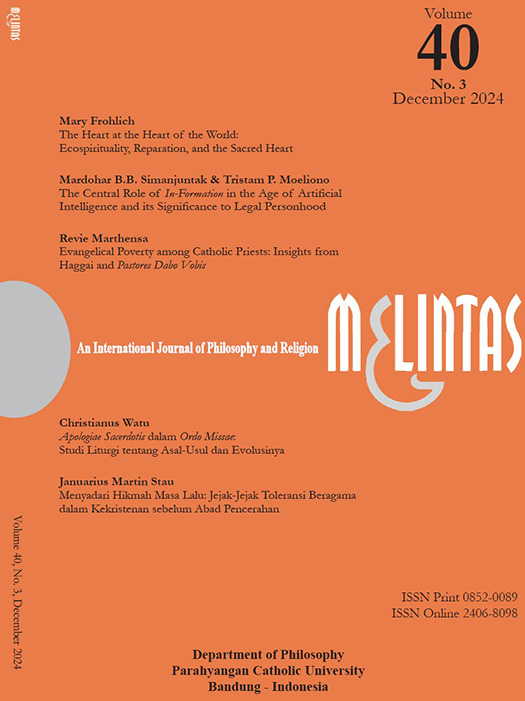
In this edition, we discuss how being heartful is both a privilege and a challenge for human beings. The first article invites us to reflect deeply on our connection with our planet Earth, asserting that our ability to address the climate crisis demonstrates sharing the heart of Jesus. The author begins by outlining existential issues proposed by James Lovelock’s Gaia theory, elaborates on these concerns from a Christian perspective, and proposes best practices rooted in the Sacred Heart devotion. The second article addresses the question of legal personhood from an epistemological standpoint. The authors explore the foundations of human civilisation using Yuval Noah Harari’s perspective on information as shared knowledge and formative elements in societies. They also argue that emotional considerations, including compassion, are inherently part of any human legal system. The third article discusses the challenges pastoral leaders face in an era characterised by abundance and material comfort. Drawing inspirations from the Book of Haggai, Pastores Dabo Vobis (PDV), and the exemplary lifestyle of Pope Francis, the principle of evangelical poverty is interpreted as surrendering oneself to God’s abundance. The author suggests that maintaining a generous heart devoted to service is essential for addressing contemporary challenges associated with priestly lifestyles. The fourth article explores the role of apologiae sacerdotis within Ordo Missae, identifying these prayers as spiritual and personal bridges for celebrants celebrating the Eucharist. The author traces their historical implementation and significance from the ninth century to the present day, and provides a liturgical analysis that compares practices across three distinct traditions: the Apologia, Franca, and Rhein schools. The fifth article explores the intersection between pre-Enlightenment traditions and contemporary perspectives on religious tolerance. By examining historical events involving the ancient Greeks and Romans, as well as the teachings of Petrus Abelardus, Augustine of Hippo, Thomas Aquinas, and Ramon Llull, the author provides valuable insights into how modern society can cultivate a progressive caring attitude that embraces the coexistence of diverse faiths and religions in a globalised world.
As numerous conflicts, both armed and humanitarian, escalate around the world today, the need to turn inward and reflect on our hearts is more relevant than ever. The emergence of technological precipices further challenges us to consider how truly human we ought to remain in our responses. Indeed, sustaining compassion and empathy amid uncertainties and rapid technological advancement may prove crucial in determining the kind of future humanity will inhabit. The heart, therefore, remains our ultimate guide.
Editor.